


Brain Gauge by Cortical Metrics
Take control of your brain health.
Brain Gauge is an affordable, fast, and easy way to:
- Quickly assess your brain function in as little as 2–15 minutes, providing objective insight into your sensory and cognitive performance.
- Improve brain function through guided “Brain Gym” exercises designed to strengthen the brain’s processing speed, accuracy, attention, and other neurological functions.
- Track your progress over time by repeating testing to see how your brain responds to treatments such as hyperbaric oxygen therapy (HBOT), transcranial laser therapy, neurofeedback, dietary changes, supplements, and other therapies.
Brain Gauge is a neurofunctional testing and training system developed from decades of neuroscience research and engineering. It is supported by more than 140 peer-reviewed scientific publications and is designed to measure how efficiently your brain processes sensory information—an important indicator of overall neurological health.
At Aspen Integrative Medical Center, we use Brain Gauge as an objective tool to help evaluate brain function, identify areas that may benefit from treatment, monitor improvement over time, and guide personalized treatment recommendations. It is commonly used for individuals experiencing brain fog, memory concerns, concussion or traumatic brain injury, long COVID, chronic Lyme disease, mold illness, neurological disorders, ADHD, and age-related cognitive changes.
Whether you’re looking to establish a baseline of your brain health, monitor your recovery, or optimize cognitive performance, Brain Gauge provides quick, objective data that can help guide your care.
Interested in learning more? Contact Aspen Integrative Medical Center to find out whether Brain Gauge testing and training may be right for you.
Why is the Brain Gauge so important?
Your brain is sensitive. But it’s not always easy to tell how it’s changing.
The Brain Gauge can detect extremely subtle differences in cognitive function. We can tell when something affects your brain, even if you can’t. From cough syrup and alcohol, to jumping jacks, meditation, and sleep. Your Brain Gauge scores will show the difference. No other methods in the world are this sensitive.
These methods have been validated by over 50 years of clinical studies. And that’s not just our own research – the Brain Gauge has been used at more than 50 universities around the world.
The Brain Gauge let’s you keep track of conditions like dementia, Alzheimer’s and ADHD, and see how your brain responds to new treatments or medications. You can then generate a detailed brain health evaluation, or export your entire testing history and run your own advanced analysis. And all of your data is instantly accessible from anywhere in the world thanks to our secure, cloud-based storage.
What is Brain Gauge?
The Brain Gauge is a revolutionary, non-invasive neurofunctional test and a training tool. It is the result of combining decades of neuroscientific research (1980s to present at the University of North Carolina) with state-of-the-art engineering.It gives you a clear, data-driven look at how your brain is functioning. It’s a scientific tool designed to help you to frequently monitor, understand, and improve brain fitness.
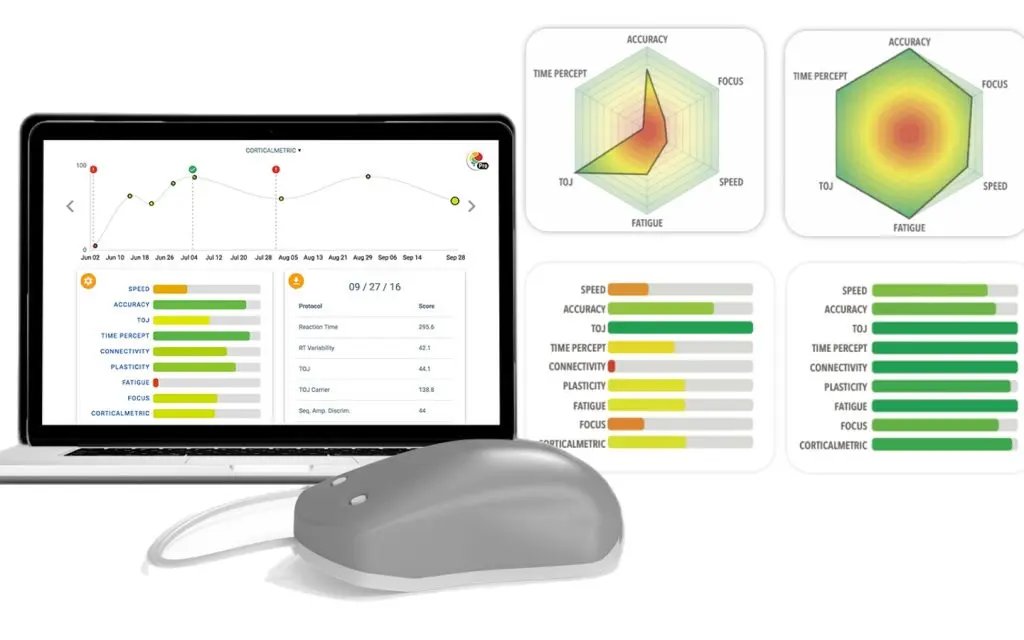
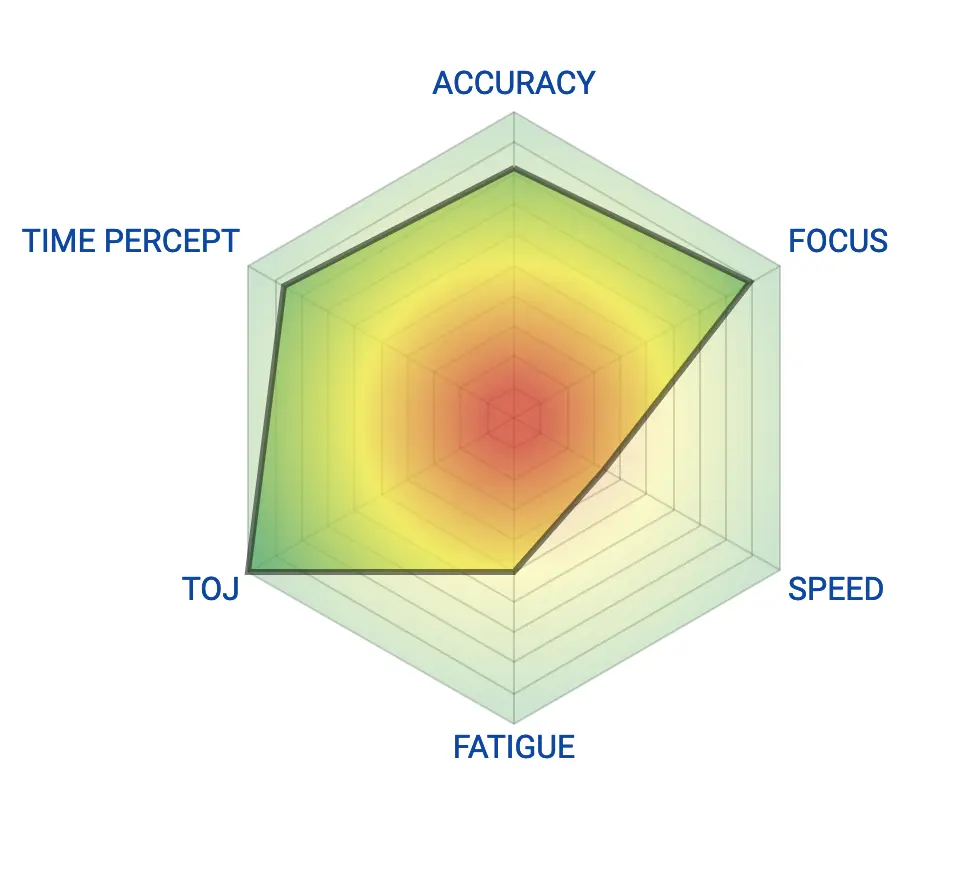
Brain Gauge measures 8 essential components of brain health:
- Focus – your brain’s ability to concentrate on the task at hand
- Speed – your brain’s ability to react to changes in your environment
- Fatigue – how quickly your brain begins to tire during mentally demanding tasks
- Accuracy – your brain’s ability to detect small differences between sensations
- Sequencing – your brain’s ability to keep track of the order of events
- Time Perception – your brain’s ability to keep track of the duration of events
- Plasticity – your brain’s ability to respond and adapt to changes in your surroundings
- Connectivity – how well different regions of your brain are able to communicate and coordinate
You’ll also get a comprehensive mental fitness score that we call your corticalmetric.
How does it work?
The Brain Gauge by Cortical Metrics is a small, corded device—similar in size and shape to a computer mouse—that connects to your computer via a USB-C port. It measures brain function by delivering gentle, precise vibrations to your fingertips and asking you to respond to simple questions about what you feel.
These brief, interactive tests evaluate how accurately and quickly your brain processes sensory information. By assessing your responses, Brain Gauge provides objective data about different aspects of neurological function, including how well various regions of the brain are communicating with one another.
The testing process is similar in concept to an eye exam. Just as vision tests gradually increase difficulty to determine how well you can distinguish letters or shapes, Brain Gauge progressively challenges your sensory perception—using subtle fingertip vibrations instead of visual cues—to evaluate how precisely your brain can differentiate between stimuli.
Although the testing focuses on touch, it reflects much more than just fingertip sensitivity. When the fingertips are stimulated, signals are sent to specific regions of the brain. Each test is designed to assess how these regions function individually and how they interact as a network. This allows Brain Gauge to provide meaningful insight into overall brain performance.
Your results are automatically recorded and shared with your provider, allowing us to track changes in brain function over time. This can help identify patterns, monitor progress, and better understand how therapies—such as hyperbaric oxygen therapy (HBOT), transcranial laser therapy, neurofeedback, and other treatments—may be impacting your neurological health.
Brain Gauge is backed by decades of research and has been used in both clinical and research settings to study and monitor conditions such as concussion, traumatic brain injury, ADHD, autism spectrum disorders, and other neurological concerns.
Exemplary Case Study
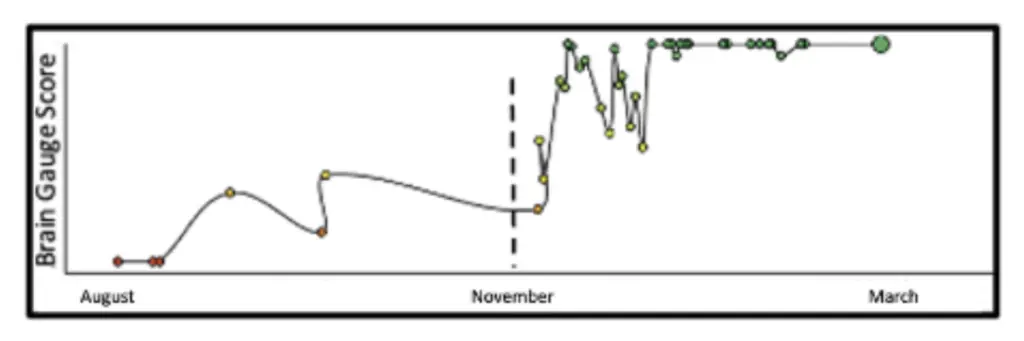
The tracking plot below illustrates the progression of an 80-year-old male who initially presented with memory loss and early dementia. Hyperbaric treatments produced modest improvements in Brain Gauge scores between August and November. In November, Brain Gauge Gym activity was added (dashed line), resulting in a profound improvement in both objective scores and reported symptoms. The individual now reports an absence of memory loss.


About
Almost everyone! The Brain Gauge is prescribed to people who are suffering from decline in cognitive function, neurotrauma (concussion, TBI, stroke), neurodegenerative disorders (dementia, Parkinson’s, MS), neurodevelopmental disorders (ADHD, OCD, Tourette’s, Schizophrenia), pain (migraine, fibromyalgia), substance abuse (alcoholism), brain fog (mold toxicity), and behavioral issues (stress, anxiety).
It’s also used for amateur and professional athletes looking to improve their performance.
The Brain Gauge comes with three key applications designed to help you understand and improve your brain’s performance:
The app includes three main functions:
Brain Gauge Quick Check: A 90-second test that gives you a fast snapshot of your brain’s current state, similar to a vital sign such as taking your blood pressure. This is used to track what treatments, interventions and/or supplements are (or are not) working.
Brain Gauge Standard Test: A 15-minute test that provides a detailed look at various aspects of brain functions, helping to identify your specific strengths and weaknesses.
Brain Gauge Gym: Just what it sounds like! It provides exercises you can do to strengthen key connections and improve overall brain fitness.
Yes! While the Brain Gauge may have been prescribed to you, up to 5 people can use the home device. You are welcome to share it with others in your household.
VERY IMPORTANT: Each user must have their own unique Brain Gauge ID. This ID is assigned by your physician and ensures results are correctly attributed to the right person. If anyone using the device does not yet have a Brain Gauge ID, please contact our office and we will create one for them.
We offer a free initial test in-office to anyone interested in the Brain Gauge to assess how your brain is functioning. We then offer the option to rent the Brain Gauge for $100 per month or purchase the device for $800. You can also rent to own, so it’s yours if rented for 8 months. Prices subject to change.
Unlike other cognitive assessments, Brain Gauge deliver cognitive assessments through a dedicated hardware device. This ensures that the tests aren’t interrupted by other applications running on your computer. It also means that the accuracy of our tests does not depend on the precision of third-party hardware (such as computer mice, speakers, or monitors) which can introduce random delays that would invalidate results.
The Brain Gauge also delivers your results in terms that everyone can understand. In the ProTools or RxTools app, hover over the name of any score (Speed, Focus, Accuracy, etc.) to read more about what it means.
Yes, the Brain Gauge is a tool that can be used to monitor the progression of diseases such as Alzheimer’s. Our tests and metrics can help patients and their physicians track symptoms, and results may be used and see how well a person is responding to different treatments.
The Brain Gauge is not a standalone diagnostic, and it cannot treat or prevent any disease or condition.
No. The Brain Gauge is not intended to diagnose a specific disease on its own. Rather, it is a functional assessment tool that can provide very helpful information about how the brain and nervous system are performing.
There is growing anecdotal feedback from both patients and healthcare providers suggesting that regular Brain Gauge training may help lessen symptoms related to central neuropathy and improve sensory processing over time. While these reports are encouraging, more research is needed to determine how effective Brain Gauge training truly is for these conditions.
Whether Brain Gauge can also improve symptoms of peripheral neuropathy remains unknown. Although some individuals may notice improvements, this has not yet been well studied and additional research is needed before any conclusions can be drawn.
There are quite a few neuroscience researchers who have used our technology in their labs (most studies used the Brain Gauge Pro). We’ve been involved in many areas of research over the past decade and continue to investigate a wide range of neurological conditions, including:
- Neurotrauma (concussion, TBI)
- Neurodegenerative disorders (aging, Parkinson’s)
- Pharmacological alterations (alcohol, substance abuse, drug treatments)
- Neurodevelopmental disorders (autism, ADHD, OCD, Tourette’s)
- Pain disorders (migraine, fibromyalgia, VVS, carpal tunnel)
To see our complete library of peer-review papers, check out the Publications page.
Condition Specific Information
The Brain Gauge is prescribed to people who are suffering from:
- Decline in cognitive function
- Neurotrauma (concussion, TBI, stroke)
- Neurodegenerative disorders (dementia, Parkinson’s, MS)
- Neurodevelopmental disorders (ADHD, OCD, Tourette’s, Schizophrenia)
- Pain (migraine, fibromyalgia)
- Substance abuse (alcoholism)
- Brain fog (mold toxicity)
- Behavioral issues (stress, anxiety).
It’s also used for amateur and professional athletes looking to improve their performance.
Yes, the Brain Gauge is a tool that can be used to monitor the progression of diseases such as Alzheimer’s. Our tests and metrics can help patients and their physicians track symptoms, and results may be used and see how well a person is responding to different treatments.
The Brain Gauge is not a standalone diagnostic, and it cannot treat or prevent any disease or condition.
No. The Brain Gauge is not intended to diagnose a specific disease on its own. Rather, it is a functional assessment tool that can provide very helpful information about how the brain and nervous system are performing.
There is growing anecdotal feedback from both patients and healthcare providers suggesting that regular Brain Gauge training may help lessen symptoms related to central neuropathy and improve sensory processing over time. While these reports are encouraging, more research is needed to determine how effective Brain Gauge training truly is for these conditions.
Whether Brain Gauge can also improve symptoms of peripheral neuropathy remains unknown. Although some individuals may notice improvements, this has not yet been well studied and additional research is needed before any conclusions can be drawn.
Using the Device
Brain Gauge “Quick Check” is a 90-second test that gives you a fast snapshot of your brain’s current state, similar to a vital sign such as taking your blood pressure. This is used to track what treatments, interventions and/or supplements are (or are not) working.
Brain Gauge “Standard Test” is a 15-minute test that provides a detailed look at various aspects of brain functions, helping to identify your specific strengths and weaknesses.
We advise doing the “Quick Check 90S” once weekly
The “Standard (15-20M)” test should be done once monthly.
Brain fitness parallels physical fitness. Training 15-20 minutes a day 2-3 times per week is recommended for most individuals. Many people end up training much more, and in that case the recommendation is to take at least 1 day a week off (i.e, no more than 6 days per week).
Troubleshooting
If you are having difficulty sensing the vibrations in your fingertips, you have two options—and you may try both:
1. Start with the Brain Gauge Gym instead of the “Standard Test.”
Your ability to sense the vibrations may improve with regular training, so keep practicing consistently for at least 2–3 weeks. After completing Level 4 of the Brain Gauge Gym, return to the “Standard Test” to assess your current brain function.
2. Try using your other hand.
Sensation may be better in one hand than the other. Be sure to select either “Left” or “Right” on the main page so the app knows which hand you are using.
Research
There are quite a few neuroscience researchers who have used our technology in their labs (most studies used the Brain Gauge Pro). We’ve been involved in many areas of research over the past decade and continue to investigate a wide range of neurological conditions, including:
- Neurotrauma (concussion, TBI)
- Neurodegenerative disorders (aging, Parkinson’s)
- Pharmacological alterations (alcohol, substance abuse, drug treatments)
- Neurodevelopmental disorders (autism, ADHD, OCD, Tourette’s)
- Pain disorders (migraine, fibromyalgia, VVS, carpal tunnel)
To see our complete library of peer-review papers, check out the Publications page.