




Breast Cancer and Hyperbaric Oxygen Therapy: What Recent Research Is Showing
October is Breast Cancer Awareness Month, an important time not only to raise awareness about breast cancer screening and treatment, but also to recognize the challenges that can persist long after treatment is complete.
For some breast cancer survivors, surgery and radiation therapy can leave behind lasting effects including pain, fibrosis (scar-like tissue changes), skin and soft-tissue damage, impaired wound healing, and restricted movement.
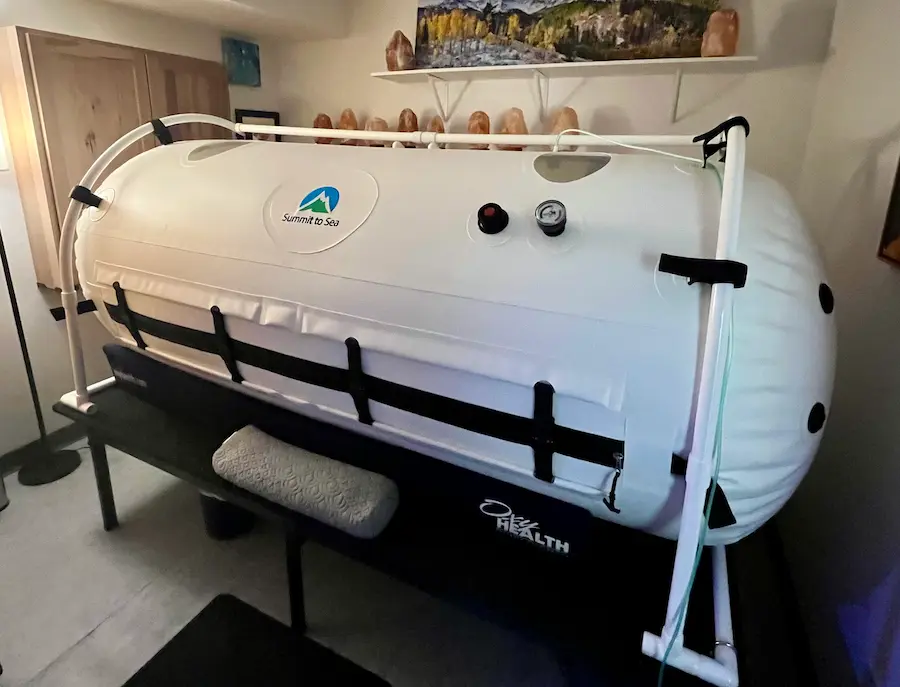
One therapy being studied for some of these complications is hyperbaric oxygen therapy (HBOT).
HBOT involves breathing concentrated oxygen in a pressurized chamber. The increased pressure allows substantially more oxygen to dissolve into the bloodstream and reach tissues where circulation or oxygen delivery may be impaired. In tissues damaged by radiation, HBOT may help stimulate the formation of new blood vessels and support the body’s natural tissue-repair processes.
Importantly, HBOT is not a treatment for breast cancer itself and should not be considered a replacement for standard cancer treatment. However, research is increasingly examining its potential role as a supportive therapy for certain complications of breast cancer treatment.
HBOT and Radiation-Related Tissue Damage
Radiation therapy is an important part of breast cancer treatment for many patients. While radiation effectively targets cancer cells, it can also damage healthy tissue within the treatment field.
Some of these changes can develop months or even years after radiation treatment and may include:
- Breast, chest wall, or shoulder pain
- Fibrosis and tissue tightness
- Skin and soft-tissue changes
- Swelling or edema
- Reduced range of motion
- Impaired wound healing
Radiation can damage small blood vessels within treated tissue, resulting in reduced circulation and oxygen delivery. HBOT is used in medicine for certain forms of delayed radiation tissue injury because increasing tissue oxygen levels can stimulate angiogenesis—the formation of new blood vessels—and support tissue repair.
Research specifically involving breast cancer survivors has become increasingly encouraging.
Randomized Trial Finds Improvement in Radiation-Related Fibrosis
One of the strongest studies to date was published in JAMA Oncology in 2024.
Researchers studied women who continued to experience significant breast, chest wall, or shoulder pain along with fibrosis, edema, or movement restriction at least 12 months after breast radiation.
A total of 189 women were included in the randomized trial. Women offered HBOT typically underwent 30–40 treatments over approximately 6–8 weeks.
The results were particularly interesting for fibrosis.
At follow-up, moderate-to-severe fibrosis was reported by:
33% of women offered HBOT, compared with 51% of women in the control group.
This difference was statistically significant.
Pain results were more complicated. Simply being offered HBOT did not produce a statistically significant improvement in pain across the entire randomized group. However, only about one-quarter of the women offered HBOT actually completed the treatment course.
Among the women who did complete HBOT, researchers observed significant reductions in both pain and fibrosis.
The authors concluded that HBOT appears beneficial for a subgroup of women experiencing late tissue effects following breast irradiation, while also noting the substantial time commitment involved in completing treatment.
HBOT for Wound Healing After Breast Cancer Surgery
Another area of interest is wound healing following breast cancer surgery.
A Cleveland Clinic study published in 2025 examined 20 patients treated with HBOT for difficult-to-heal wounds following breast cancer surgery.
The majority of these patients had complications such as mastectomy flap necrosis or wound dehiscence, where part of the surgical wound breaks down or fails to heal properly.
Patients received HBOT at 2.0 atmospheres absolute (ATA) for 90-minute sessions, with a median of approximately 30 treatments.
The results were encouraging: All 20 patients ultimately achieved complete wound healing.
Healing allowed patients to continue with their planned cancer treatment, and earlier initiation of HBOT was associated with faster wound healing.
These results are encouraging, although this was a small retrospective study without a control group. Larger controlled studies will be needed to determine which patients are most likely to benefit.
A Note About Treatment Pressure
Some of the breast cancer studies discussed above used HBOT pressures around 2.0 ATA. At Aspen Integrative Medical Center, we use mild hyperbaric oxygen therapy at 1.3 ATA.
While these breast cancer studies did not directly compare 1.3 ATA with higher-pressure HBOT, research demonstrates that mild hyperbaric pressures are biologically active and can produce meaningful physiological effects.
Pressure and oxygen concentration are increasingly understood as components of the overall hyperbaric “dose,” rather than HBOT simply becoming active at a specific pressure threshold.
For a deeper look at this research, read our article: “Mild vs. High-Pressure Hyperbaric Oxygen Therapy: Is Higher Pressure Really Better?”
What About HBOT During Radiation Treatment?
Researchers have also begun investigating whether HBOT could reduce acute radiation dermatitis—the redness, irritation, and skin injury that can develop while a patient is actively undergoing radiation therapy.
A small randomized pilot study published in 2025 included 30 patients undergoing radiation therapy for breast cancer. Participants received either standard care or HBOT three times per week during their course of radiation.
In this study, HBOT did not significantly reduce the incidence or severity of radiation dermatitis compared with standard care. Researchers did observe trends toward less skin discomfort and improved patient-reported outcomes, but these differences were not statistically significant.
The study did, however, find that HBOT was well tolerated, and the researchers recommended larger trials to better determine whether there is a role for HBOT during active radiation treatment.
This is an important reminder that HBOT research is evolving and that not every potential application has demonstrated a clear benefit.
Does Oxygen Make Cancer Grow?
A question that sometimes comes up when discussing HBOT and cancer is whether increasing oxygen levels could stimulate tumor growth or metastasis.
Interestingly, experimental research has not supported this concern.
A 2017 study investigated HBOT in mouse models implanted with human triple-negative and triple-positive breast cancer cells. Researchers found that HBOT suppressed tumor growth in both models.
In the triple-negative model, HBOT also reduced the number and total area of metastatic lesions in the lungs and reduced several markers associated with a more invasive tumor phenotype.
These findings are intriguing, but there is an important distinction:
This was an animal study, not a human clinical trial.
Therefore, it would be inappropriate to conclude that HBOT treats breast cancer or prevents metastasis in people based on these results. What the research does provide is additional evidence against the longstanding concern that hyperbaric oxygen necessarily stimulates cancer growth or metastasis.
HBOT should still be viewed primarily as a supportive therapy for selected treatment-related complications, rather than as an anticancer therapy.
What Does the Research Tell Us So Far?
Taken together, the current research suggests that HBOT may have a useful role for certain patients dealing with complications following breast cancer treatment—particularly late radiation-related tissue injury and difficult-to-heal surgical wounds.
The evidence is strongest for conditions involving damaged, poorly vascularized tissue, where increasing oxygen delivery may help stimulate new blood vessel formation and tissue repair.
Research has shown encouraging results for:
- Radiation-induced fibrosis
- Chronic breast or chest-wall pain associated with radiation injury
- Radiation-damaged soft tissue
- Complicated or nonhealing surgical wounds following breast cancer surgery
At the same time, HBOT is not a treatment for breast cancer itself, and evidence for some proposed applications remains preliminary.
As with any supportive therapy during or after cancer treatment, HBOT should be considered on an individual basis and coordinated with the patient’s oncology team.
The Bottom Line
Breast cancer survival has improved dramatically, making the long-term effects of treatment increasingly important.
For patients experiencing chronic radiation-related tissue damage or complicated wound healing after breast cancer treatment, hyperbaric oxygen therapy represents a promising supportive option with a growing body of clinical research behind it.
Recent studies—including a randomized clinical trial demonstrating improvement in radiation-related fibrosis and a Cleveland Clinic study reporting successful healing of complex postoperative wounds—provide encouraging evidence for specific applications of HBOT.
At the same time, HBOT should be viewed as one potential tool for managing treatment-related complications rather than an alternative to conventional cancer care.
At Aspen Integrative Medical Center, all of our hyperbaric treatments and protocols are physician-supervised by Dr. Paul Despres, ND, our Medical Director. This oversight allows us to evaluate whether HBOT is safe and appropriate for each patient and individualize treatment based on their health concerns, medical history, cancer treatment history, and response to therapy.
For patients currently undergoing cancer treatment, we also believe supportive therapies such as HBOT should be coordinated with the patient’s oncology team when appropriate.
Read the Research
- Hyperbaric Oxygen Therapy and Late Local Toxic Effects in Patients With Irradiated Breast Cancer — JAMA Oncology
- Hyperbaric Oxygen Therapy for Complex Wound Management Following Breast Cancer Treatment — PubMed
- Efficacy and Safety of HBOT for Radiation-Induced Dermatitis in Patients With Breast Cancer — PubMed
- Oxygen-Dependent Regulation of Tumor Growth and Metastasis in Human Breast Cancer Xenografts — PLOS ONE
This article is for educational purposes and is not intended to replace individualized medical advice or cancer treatment. Patients undergoing active cancer treatment should discuss complementary and supportive therapies with their oncology team.